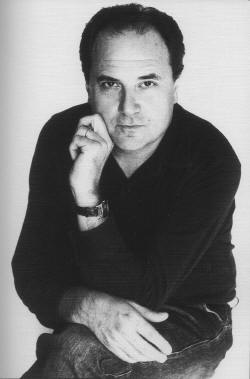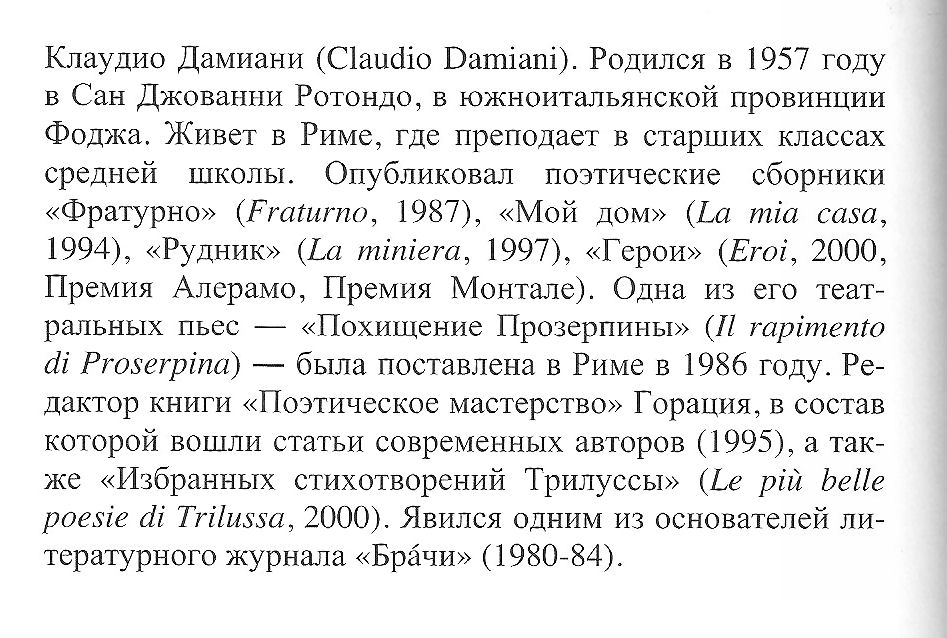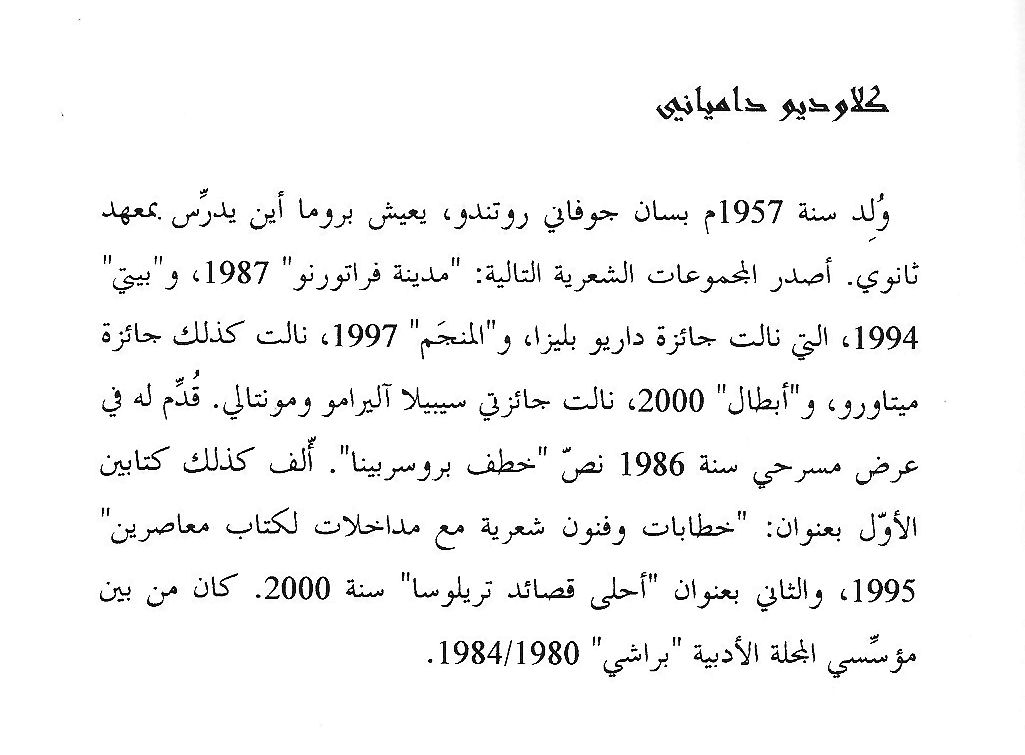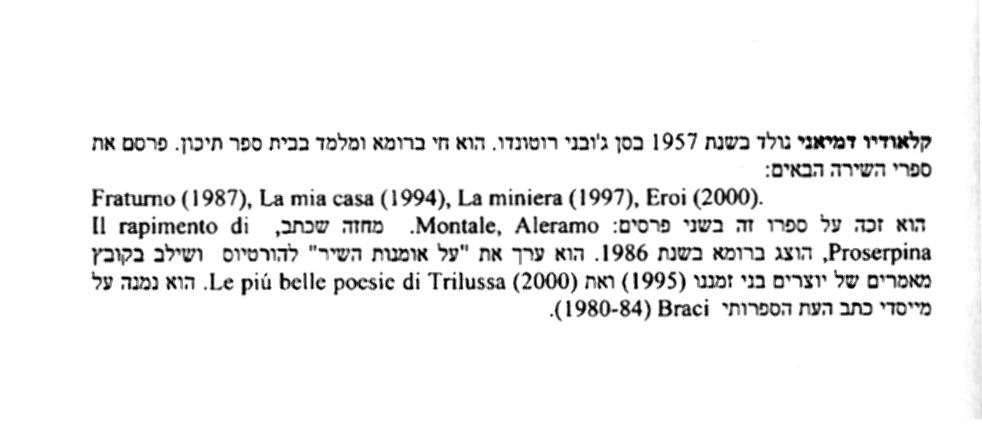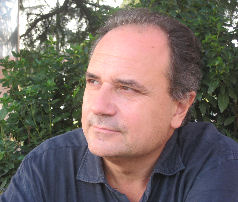



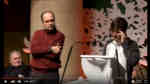



Claudio Damiani è nato nel 1957
a San Giovanni Rotondo. Vive a
Roma dall'infanzia.
Ha pubblicato le raccolte
poetiche
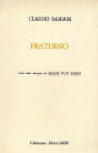
Fraturno
(Abete,1987),
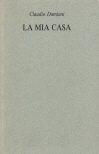
La mia casa
(Pegaso, 1994, Premio Dario
Bellezza),
La miniera
(Fazi, 1997, Premio Metauro),
Eroi
(Fazi, 2000, Premio Aleramo,
Premio Montale, Premio
Frascati),
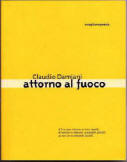
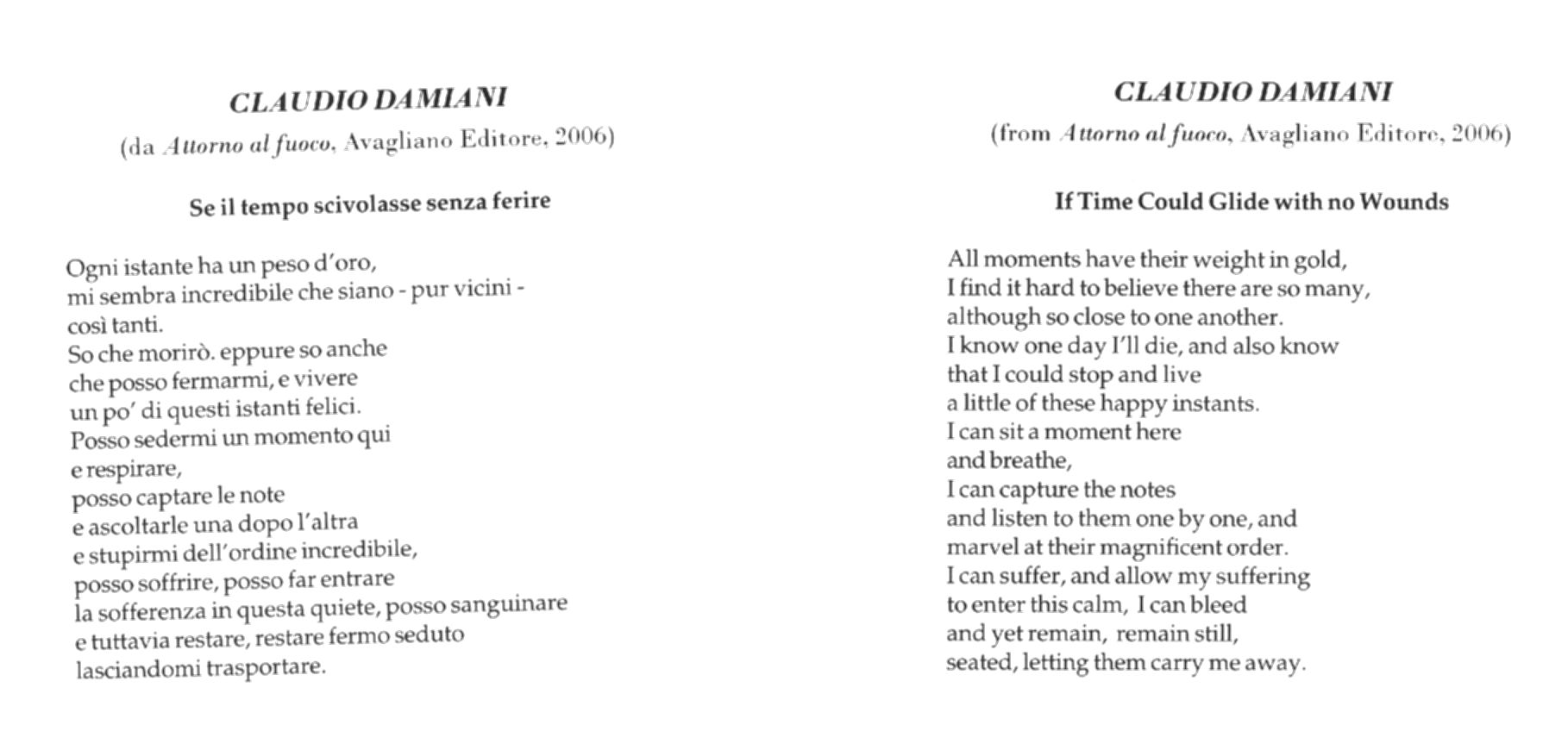
Attorno al fuoco
(Avagliano, 2006, finalista
Premio Viareggio, Premio Mario
Luzi, Premio Violani Landi,
Premio Unione Lettori),
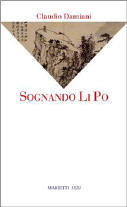
Sognando Li Po
(Marietti, 2008, Premio Lerici
Pea, Premio Volterra Ultima
Frontiera, Premio Borgo di
Alberona, Premio Alpi Apuane),
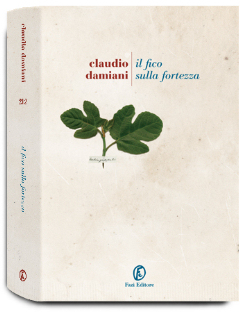
Il fico sulla fortezza
(Fazi, 2012, Premio
Arenzano, Premio Camaiore,
Premio Brancati, finalista
vincitore Premio Dessì, Premio
Elena Violani Landi),
Ode al monte Soratte,
con nove disegni di Giuseppe
Salvatori (Fuorilinea 2015),
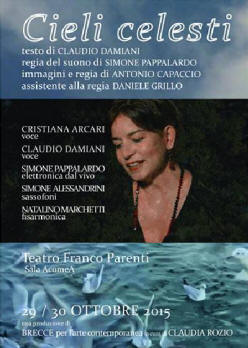
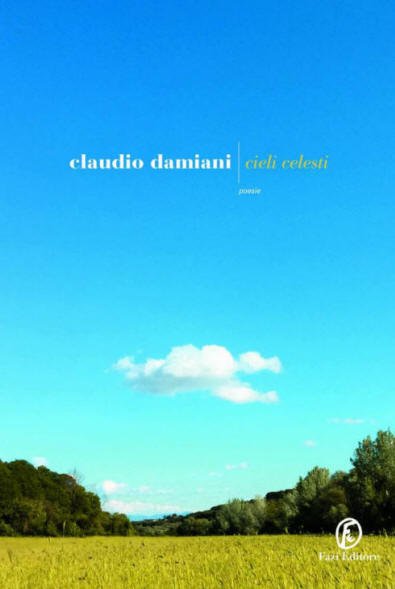
Cieli celesti
(Fazi, 2016,
Premio Tirinnanzi),
Endimione
(Interno Poesia, 2019, Premio
Carducci),
Prima di nascere
(Fazi, 2022, Premio
Viareggio),
Postomeriche,
con disegni di Giuseppe
Salvatori (Amos editore, 2024),
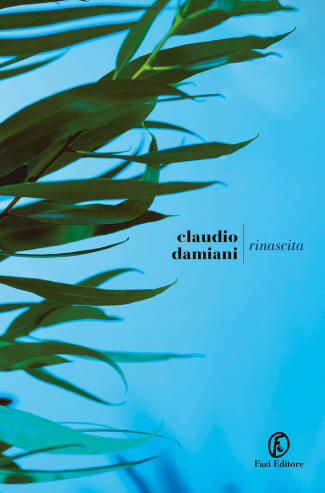
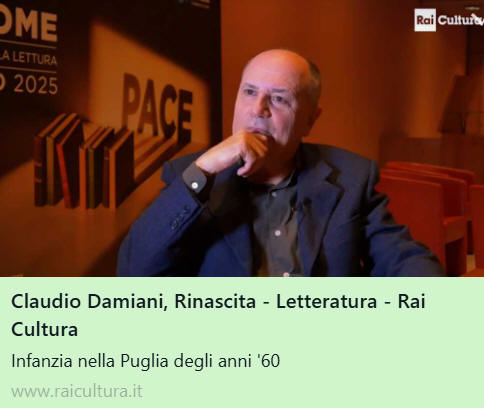
Rinascita (Fazi, 2025).
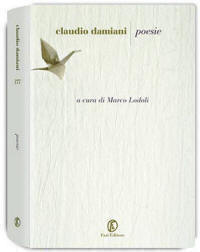
Nel 2010 è uscita
un'antologia di poesie curata da
Marco Lodoli e comprendente
testi scritti dal 1984 al 2010
(Poesie,
Fazi, Premio Prata La Poesia
in Italia, Premio Laurentum).
Ha pubblicato di teatro:
Il Rapimento di Proserpina
(Prato Pagano, nn. 4-5, Il
Melograno, 1987) e
Ninfale
(Lepisma, 2013).
Ha curato i volumi:
Almanacco di Primavera. Arte e
poesia
(L'Attico Editore, 1992);
Orazio, Arte poetica, con
interventi di autori
contemporanei
(Fazi, 1995);
Le più belle poesie di Trilussa
(Mondadori, 2000).
E' stato tra i fondatori della
rivista letteraria
Braci
(1980-84)
e, nel 2013, di
Viva, una rivista in carne e
ossa.
Suoi testi sono stati tradotti
in diverse lingue (tra cui
principalmente
spagnolo,
inglese,
serbo,
sloveno,
rumeno)
e compaiono in molte antologie
italiane (anche scolastiche) e
straniere.
Ha pubblicato i saggi
La
difficile facilità. Appunti per
un laboratorio di poesia,
Lantana Editore, 2016,
L'era nuova. Pascoli e i poeti
di oggi,
a cura di Andrea Gareffi e
Claudio Damiani, Liber Aria
Edizioni, 2017 e,
con Arnaldo Colasanti,
La vita comune. Poesie e
commenti,
Melville Edizioni, 2018.
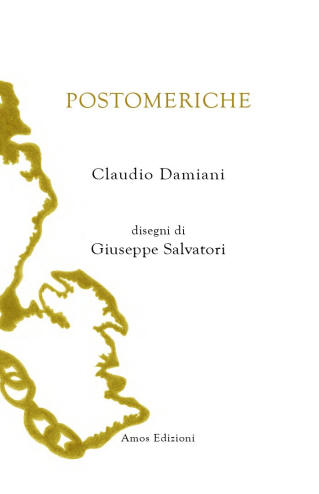
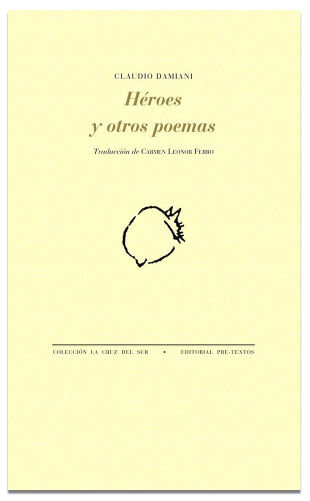
Dentro Postomeriche (Amos Edizioni, 2024) ci sono due sogni: quello del seppellimento definitivo delle armi (Le armi di Achille), e quello di una casa antica nella natura, che possa essere riabitata (sezione Guarda come brillano le onde), come la casa di Filemone e Bauci trasformata in tempio dell’ospitalità (quindi un terzo sogno: che l’ospitalità antica ritorni fra noi).
Gli eroi antichi
viaggiano verso la
natura, si lasciano
andare a una corrente,
come le armi di Achille,
che li spinge su un
cammino nuovo di
pacificazione" |
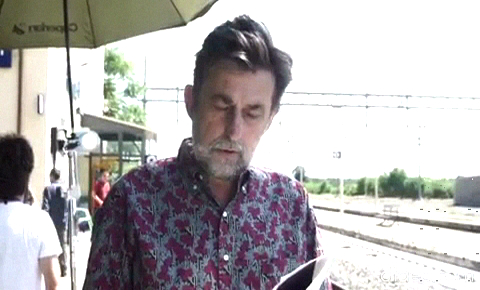
RAI CULTURA - READING . MARZO
2023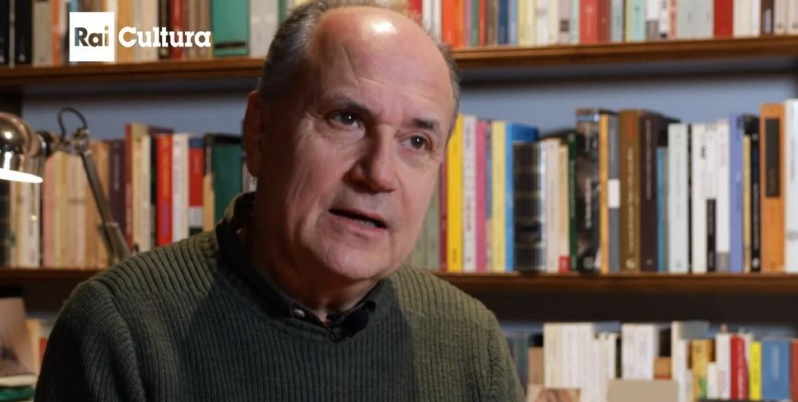

Autopresentazione -
Copertina -
Amazon -
IBS
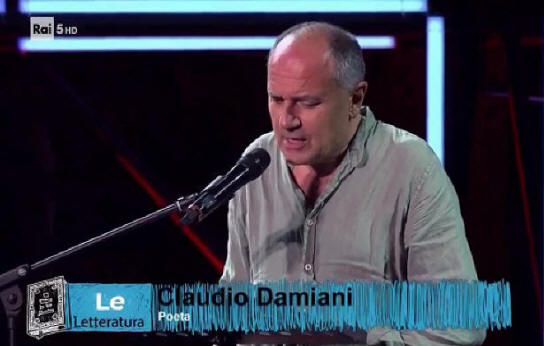
13
luglio 2021, Festival Dante
Assoluto, Basilica di Massenzio,
Roma)
 Febbraio 2021 |
|

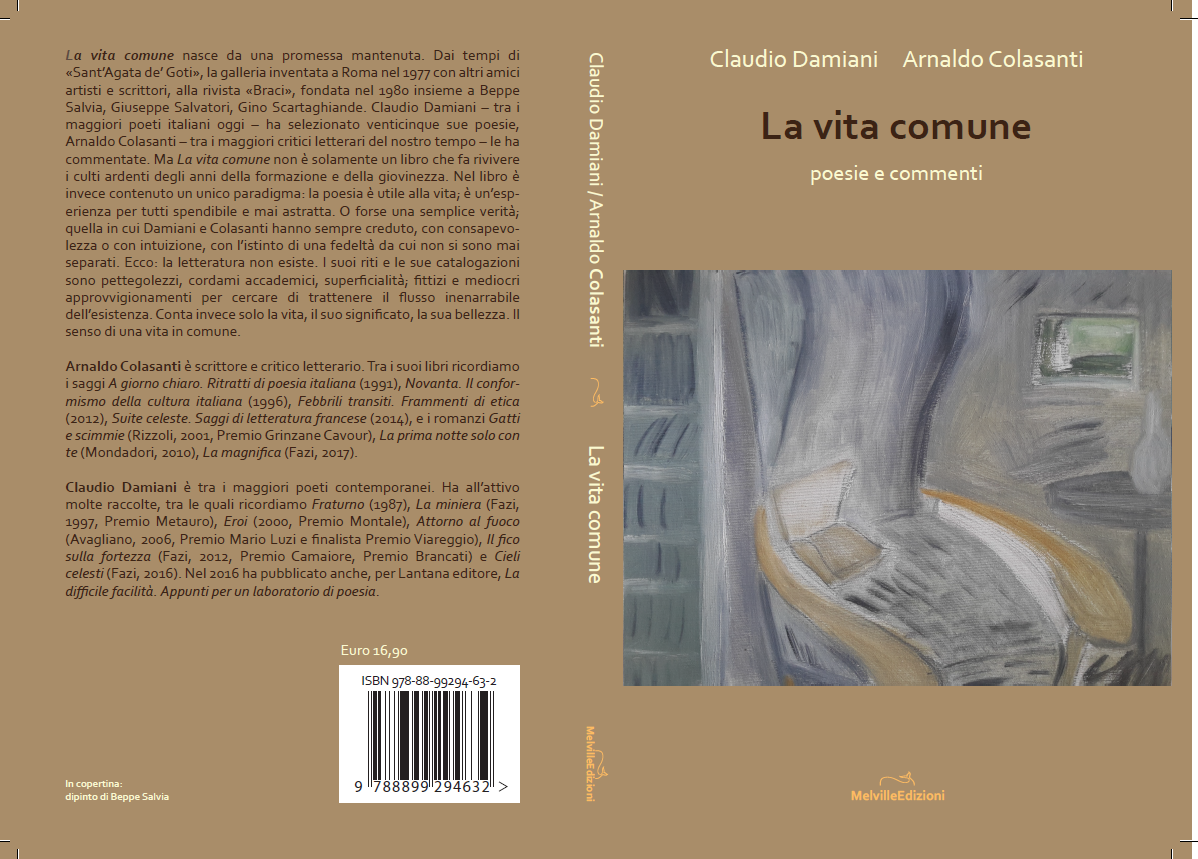
La vita comune. Poesie e commenti, Melville editore, 2018 - ibs - amazon
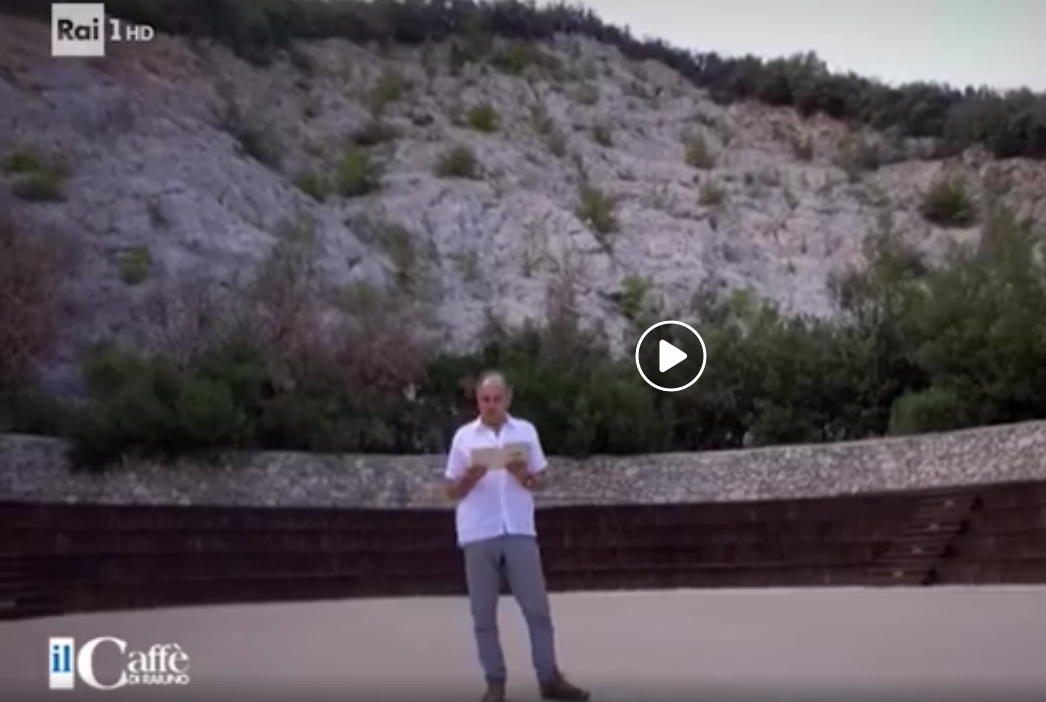
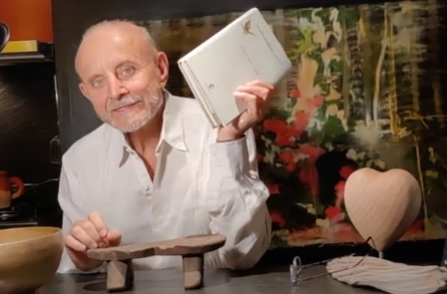
Caffè di Rai, con Yari Selvetella, regia
di Andrea Vincenzoni
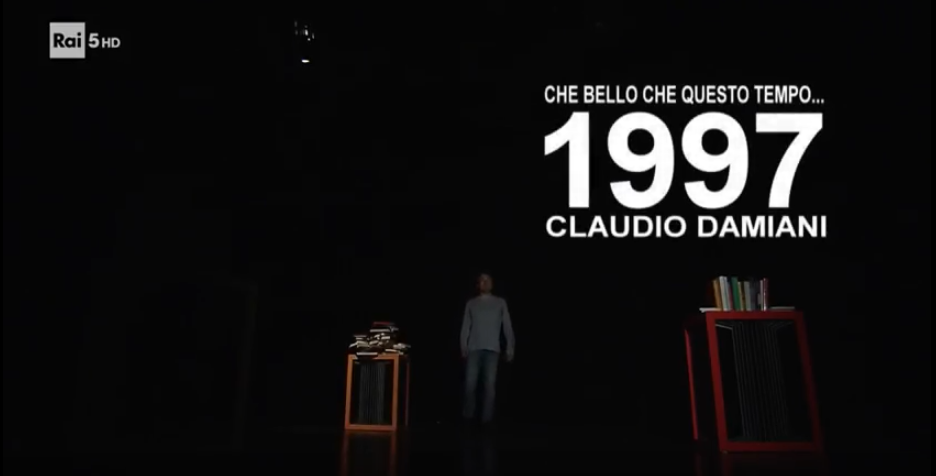
No concept, Rai 5, Stas' Gawronski legge "Che bello che questo tempo" di Claudio Damiani
|
|
|
Anche
in
ebook |
Interviste
(sono disponibili solo i testi
presenti in rete)
Claudio Damiani al Questionario
poetico, con Gisella Blanco, Il
Talento di Roma, aprile 2025
Guido Monti,"Non si sa niente",
l'arte di convivere con l'idea
della morte, Azione, 16
settembre 2024
Gisella Blanco, Prima di
nascere, Intervista a Claudio
Damiani, premio Viareggio
Rèpaci, Poesia del nostro tempo,
27 ottobre 2022
Carlo Pulsoni intervista Claudio
Damiani,Festival Europeo di
Poesia Ambientale, 30 Ottobre
2021
Marco Castellani intervista
Claudio Damiani, EDU INAF,
Istituto Nazionale di
Astrofisica, 26 agosto 2021
Alessia Bronico, Intervista a
Claudio Damiani, Alma Poesia, 24
maggio 2021
Sonia Ciuffetelli, Intervista a
Claudio Damiani, Sonia
Ciuffetelli Blog, 15 gennaio
2021
Amanda Chicca, La poesia è il
messaggio dentro la bottiglia
Intervista a Claudio Damiani,
Vela, n.3, Dicembre 2020
Giovanni Fierro, Intervista a
Claudio Damiani, Fare Voci,
novembre 2020
Marcello Ligobbi, Fraturno,
Orazio e la lingia di Damiani, 7
luglio 2020
Alessia Bronico, "Solo
recentemente ho capito che siamo
tutti anelli di luce",
finzioniblog, 5 dicembre
2017
Roberto Carvelli, Intervista a
Claudio Damiani, Nuova Ecologia,
ottobre 2017
BottegaBelenga, Cieli celesti:
Claudio Damiani pubblica per
Fazi e si racconta: "Vi invito a
un viaggio nella poesia",
Breaknewschic, 8 giugno 2017
Valentina Colonna, Risonanze
poetiche: Claudio Damiani e i
cieli della poesia, L'Unione
Monregalese, 24 maggio 2017
Pasquale Di Palmo, La voce del
poeta: Claudio Damiani. Dentro
la natura, succedeoggi, 29
aprile 2017
Anastasia Guarinoni, Claudio
Damiani su Giovanni Pascoli,
Radio Onda d'urto,
6 febbraio 2017
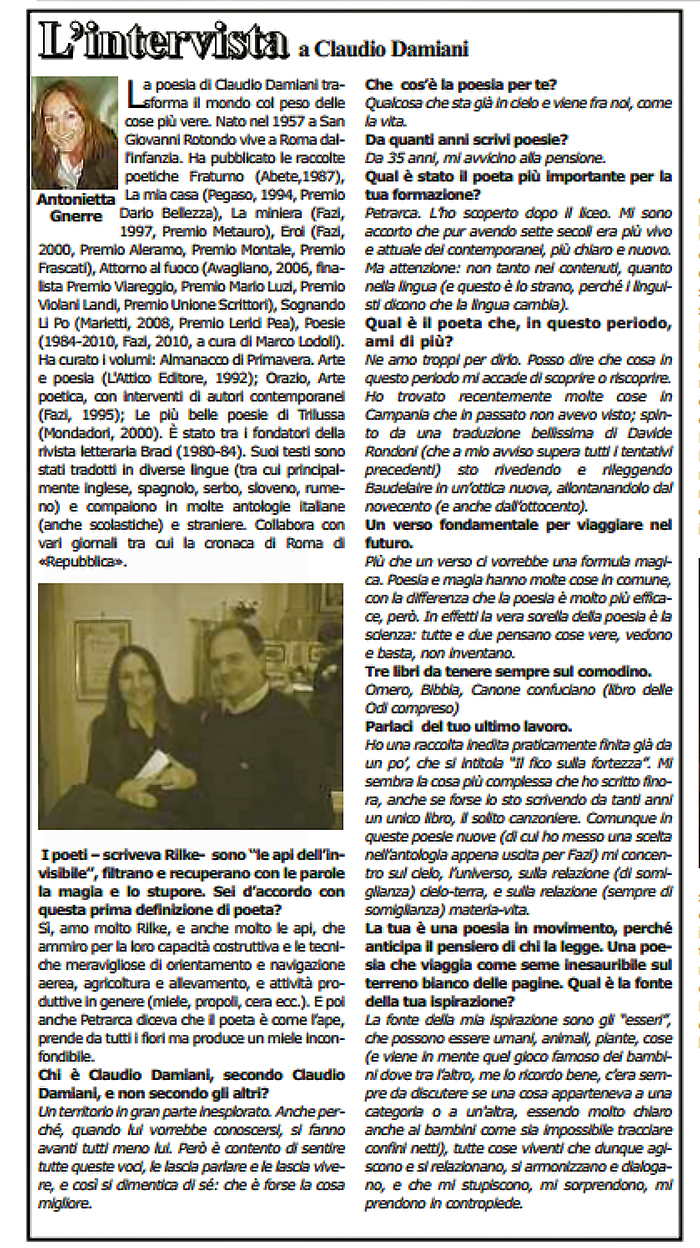
Antonietta Gnerre, Il
laboratorio difficile e facile
di Damiani, clanDestino rivista,
4 dicembre 2016
Patricia Peterle e Elena Santi,
L’osservazione del mondo
naturale: Claudio Damiani,
Mosaico, n. 144, 2016
Veronica Tinnirello, Il Rubino
di Claudio Damiani, I parte, Il
Rubino Poesia Radiofonica, 25
aprile 2014
Antonietta Gnerre, Claudio
Damiani, Il fico sulla fortezza,
Poesia, di Luigia Sorrentino,
Rai News 24, 11 ottobre
2013
Grazia Calanna, Intervista al
poeta Claudio Damiani,
L'EstroVerso,
15 settembre 2013
Simone Di Biasio, Intervista a
Claudio Damiani, Reader's Bench
Magazine, Primavera 2013, pp.
14-17
Monica Fabris, Intervista a
Claudio Damiani, Premio Baghetta
2013
Nicola Bultrini, Intervista con
Claudio Damiani «Il materialismo
è morto, il futuro è dell'uomo e
della natura», Il Tempo, 29
novembre 2012
Matteo Bianchi, ll fico sulla
fortezza, l'ultima raccolta di
Claudio Damiani, Poeti del
Parco, 20 novembre 2012
Leone D'Ambrosio, La poesia in
movimento di Claudio Damiani,
Avvenire - Lazio sette, 24
giugno 2012
Veronica Batani, "Se la poetica
è qualcosa che sta prima del
testo, io non ho nessuna
poetica", L'albatros, n.2,
maggio 2012
Lucilla Noviello, Claudio
Damiani, il poeta delle cose
naturali, Leggere:tutti, n.60,
luglio-agosto 2011
Andrea Cati, Damiani, la
leggerezza in versi, Quotidiano
d'Abruzzo, 23 luglio 2011
Antonietta Gnerre, Intervista a
Claudio Damiani, Il Ponte, 12
marzo 2011, pag. 13
Paolo Pegoraro, Claudio
Damiani: svelo la bellezza di
ogni giorno, Famiglia Cristiana,
n. 49, 5 dicembre 2010
Andrea Monda, Damiani:
«Letture che aprano mille vie»,
L'Avvenire - Roma sette, 12
luglio 2009
Carla Gubert, Dialogo
con Claudio Damiani su Braci,
CIRCE (Catalogo Informatico
Riviste Culturali Europee)
Giancarlo Carpi,
Intervista a Claudio Damiani,
Sincronie, XI, n.21-22,
genn.-dic. 2007
Rossano Astremo, Quando
il poeta scopre il presente,
Nuovo quotidiano di Puglia, 14
marzo 2007 (vedi
anche: http://vertigine.wordpress.com/tag/claudio-damiani )
Giovanni Fierro, Monti
di Versi, in Alpinismo
Goriziano, n.4, ott.-dic. 2006
Paolo Pegoraro, La
semplice complessità di Damiani,
Letture, ottobre 2006
Rosa Elisa Giangoia, in Lettera
in versi, 2006
Enzo Verrengia,
Costituirsi in una cerchia,
Stilos, 1 agosto 2006
Alessandro Moscè, Il
fuoco del presente, intervista a
Claudio Damiani, L’azione, n.13,
anno XCV, 1 aprile 2006
Andrea Monda, La poesia come
stupore, interviste a Claudio
Damiani e a Davide Rondoni,
RaiLibro, settimanale di letture
e scritture
Flavia Giacomozzi, in
Campo di battaglia, Poeti a Roma
negli anni Ottanta,
Castelvecchi, 2005, pp.285-293
Roberto Carvelli, in
Perdersi a Roma, guida insolita
e sentimentale, Edizioni
interculturali, 2004 (intervista
aggiornata nella nuova edizione,
Iacobelli Editore, 2013)
Antonio Veneziani, Un'
intervista con il poeta Claudio
Damiani, "Liberazione", 18
giugno 1997
 Camminare, video di Filippo Carli |
 Piera Degli Esposti legge Se siamo così tanti |
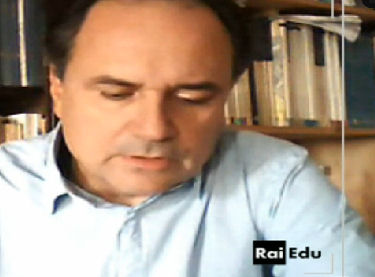
 Una teoria interminabile di eroi, video di Filippo Carli |
 Cosimo Cinieri legge Il giardino del mio amore |
Bibliografia critica
(sono disponibili solo i testi
presenti in rete)
Alessandro Moscè, L'avanguardia della tradizione, Conquiste del Lavoro - Via Po, 14 aprile 2025
Eraldo Affinati, Damiani,Il tempo della "Rinascita", Roma Sette - Avvenire, 30 marzo 2025
Davide Rondoni, La rinascita
della poesia, l’arte del
mistero, Avvenire, 14 marzo 2025
Roberto Galaverni, Il
fanciullino si siede sulle
scale, La Lettura - Corriere
della Sera, 9 marzo 2025
Paola Petrignani, Ricordi emersi
dai fondali, L'Osservatore
Romano, 26 febbraio 2025
Roberto Carvelli, Tutto continua
a essere come sempre è stato,
Huffpost, 24 febbraio 2025
Rossella Frollà, "Rinascita" di
Claudio Damiani,
pelagosletteratura.it, 21
febbraio 2025
Olga Cirillo, "Postomeriche" di
Claudio Damiani: il canto
dell’aedo, Laboratori Poesia, 2
giugno 2024
Giuseppe Grattacaso, Una parola
ci salverà? A proposito di
"Prima di nascere", Succedeoggi,
29 maggio 2024
Marco Marangoni, Poesia e
abbandono, in "L'anello critico
2022, Annuario della poesia
italiana contemporanea",
CartaCanta 2023, pp. 42-44
Alessandro Moscè, Roma, città
eterna e nonluogo, in "L'anello
critico 2022, Annuario della
poesia italiana contemporanea",
CartaCanta 2023, pp. 78-79
Loretto Rafanelli, “Prima di
nascere” di Claudio Damiani
Verso l’inconoscibile,
Succedeoggi, 20 settembre 2022
Roberto Carvelli, Di certo nei
secoli, nei millenni futuri (su
Prima di nascere),
perdersiaroma.it, 14 luglio 2022
Marco Castellani, Tutti i
neutrini di Claudio, Stardust,
12 giugno 2022
Vernalda Di Tanna, Prima di
nascere, Laboratori di Poesia, 9
giugno 2022
Simone Gambacorta, Prima di
nascere, Laboratori critici,
maggio 2022
Daniela Matronola, Prima di
nascere, Genius, 25 maggio 2022
Gisella Blanco, Prima di
nascere, Laboratori Poesia, 12
maggio 2022
Mary Barbara Tolusso, Prima di
nascere, Damiani alla Lovat con
i suoi ultimi versi, Il Piccolo,
10 maggio 2022
Daniele Piccini, Una domanda
dopo l'altra, con candore,
Corriere della Sera - La
Lettura, 3 aprile 2022
Stefano Lecchini, Prima di
nascere, Blow Up, aprile 2022
Rossella Frollà, Prima di
nascere, Pelagos, 14 marzo 2022
Gabriella Palli Baroni, Il
mistero del vivere e la natura
amica, Insula Europea, 13 marzo
2021
Marco Lodoli, I mondi ritrovati
di quattro poeti in giro per la
città, La Repubblica - Roma, 27
febbraio 2022
Alberto Fraccacreta, Damiani,
cieli pieni di domande,
Avvenire, 25 febbraio 2022
Eraldo Affinati, La poesia "dantesca" di Damiani, Roma Sette - Avvenire, 13 febbraio 2022 (poi in "Delfini, vessilli, cannonate", HarperCollins, 2023, pp. 182-84)
Renato Minore, Un classico travestito da contemporaneo, Il Messaggero, 13 febbraio 2022
Elisa Mazza, Poesia eco
dell'anima: Prima di nascere di
Claudio Damiani, Le Penne
Irriverenti, 12 febbraio 2022
Camillo Langone, Il poeta
Claudio Damiani ci insegna la
saggezza del voltarsi dall'altra
parte, Il Foglio, 9 febbraio
2022
Fabrizio Coscia, Damiani, la
vertigine del tempo e del nulla,
Il Mattino, 8 febbraio 2022
Davide Rondoni, Claudio trema.
Su Claudio Damiani, “Prima di
nascere”, Clandestino, 7
febbraio 2022
Elisa Mazza, Prima di nascere,
Le Penne Irriverenti, 4 febbraio
2022
Silvia Guidi, Punte di fiamme
invisibili. Prima di nascere,
l'ultimo libro di Claudio
Damiani, L'Osservatore Romano, 1
febbraio 2022
Stelvio Di Spigno, Claudio
Damiani, Endimione, Civiltà
Magazin, 28 maggio 2021
Arnaldo Colasanti, Braci. La poesia italiana contemporanea, Bompiani, 2021
Stefano Vitale, Endimione: i versi di Claudio Damiani, Il giornalaccio, marzo 2021
Daniela Matronola, Lezioni di gattastica, Genius, scuola di scrittura, 24 febbraio 2021
Mauretta Capuano, Ansa - Libro del giorno: i gatti nelle poesie di Damiani, Ansa.it libri, 17 febbraio 2021
Giovanni Fierro, Quella cosa che appare non vista, Fare Voci, novembre 2020
Daniele Masseglia, Damiani strega la giuria Il Premio Carducci è suo, La Nazione, 29 lglio2020
Federica Gallotta, Fermi e felici: “Endimione” di Claudio Damiani,Shockwave Magazine, 23 giugno 2020
Gianfranco Lauretano, Damiani ha fatto scendere Selene dal carro, Clandestino Rivista, 5 giugno 2020
Daniela Matronola, La poesia di Claudio Damiani, Genius, 20 maggio 2020
Stefano Lecchini, Endimione, Blow up, gennaio 2020
Silvia Secco, “E poi il cielo, uno spazio che non finiva”. Nota di lettura a Endimione, Versante Ripido, 1 gennaio 2020
Marco Lodoli, Endimione, quando
la poesia è forever young, La
Repubblica - Roma, 25 novembre
2019
Pierangela Rossi, Endimione
nella poesia di Damiani,
L'Avvenire, 24 novembre 2019
Simone Di Biasio, Endimione, o
dell'osservare dormienti,
minima&moralia, 19 novembre 2019
Elena Buia Rutt,
Dialogo con la natura. L’ultima
silloge poetica di Claudio
Damiani, L’Osservatore Romano, 4
ottobre 2019
Elisabetta Favale, Endimione -
Le poesie di Claudio Damiani,
Linkiesta, 28 settembre 2019
Camillo Langone, Si legga
"Endimione", per dormire e per
sognare, Il Foglio, 18 Settembre
2019
Leonardo Bizzarri, La poesia di
Claudio Damiani, I libri della
stanza ascosa, 23 marzo 2019
Bonifazio
Mattei, Di una poesia facile, su
un inedito di Claudio Damiani,
Specchi, quaderni del Giulio
Cesare, n.1, Dicembre 2018
Sandra Di Vito, Damiani: Il fico
sulla fortezza, Erba d’Arno,
Primavera-Estate 2018, nn.
152-153
Paolo Lagazzi, La difficile
facilità, Poesia n. 335, Marzo
2018
Bianca Garavelli, Motivazione
Premio Metauro 2017
Alberto Fraccacreta, a proposito
di "Cieli celesti" - La poesia
ancestrale, succedeoggi, 18
settembre 2017
Cinzia Marulli, ParolaPoesia:
Pensieri intorno alla poesia di
Claudio Damiani,La
poesiaelenuvole, 2 giugno 2017
Ilaria Spes, Il fico sulla
fortezza, i-libri.com, 6 maggio
2017
Ilaria Grasso, Pillole di
poesia: Claudio Damiani,
Carteggi Letterari, 29 aprile
2017
Paolo Ruffilli, Lo scorrere del
tempo e della vita, clanDestino
Rivista, 21 aprile 2017
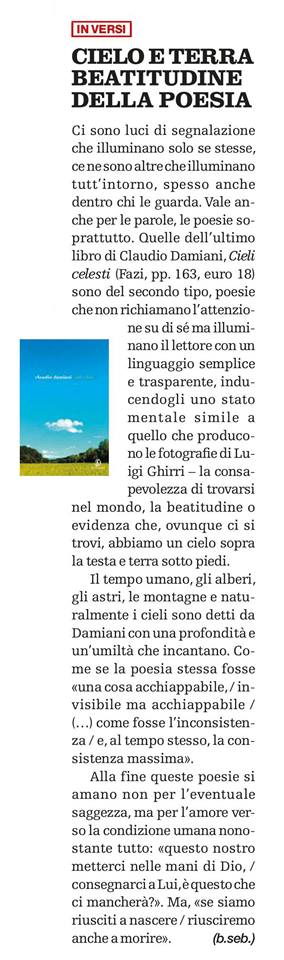
Beppe Sebaste, Cielo e terra
beatitudine della poesia, Il
Venerdì di Repubblica, 7 aprile
2017
Gian Paolo Grattarola, Cieli
celesti, Mangialibri, 24 marzo
2017
Simone Di Biasio, Il poeta
scienziato e il paesologo poeta,
L'Uffington Post, 15 marzo 2017
Mauretta Capuano, Cieli celesti,
ANSA.it
Simonetta Lux, A proposito degli
Appunti per un laboratorio di
poesia di Claudio Damiani e dei
suoi amici artisti, luxflux.net,
febbraio 2017
Gabriella Palli Baroni, Cieli
celesti, Poesia, n. 323,
febbraio 2017
Valentina Durante, Cieli
celesti, valentinadurante.com,
22 febbraio 2017
Alessandro Canzian, Cieli
celesti, laboratoripoesia.it, 13
febbraio 2017
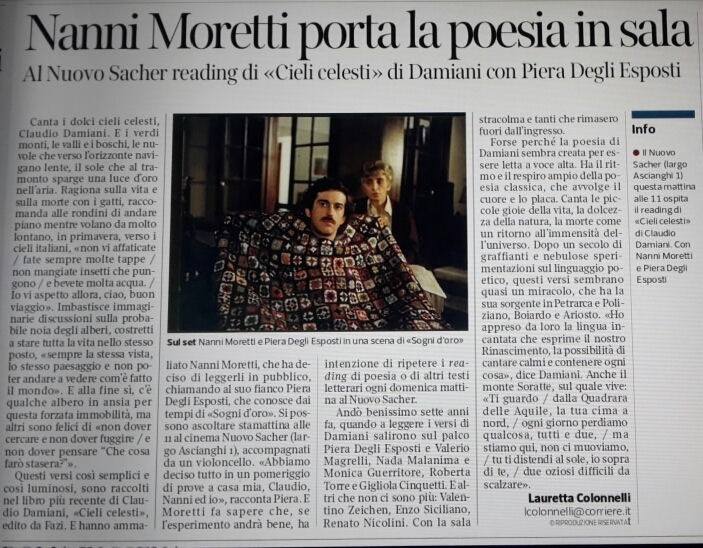
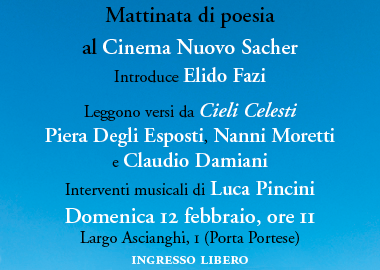
Lauretta Colonnelli, Nanni
Moretti porta la poesia in sala
- Al Nuovo Sacher reading di
"Cieli celesti" di Damiani con
Piera Degli Esposti, Corriere
della Sera, 12 febbraio 2017
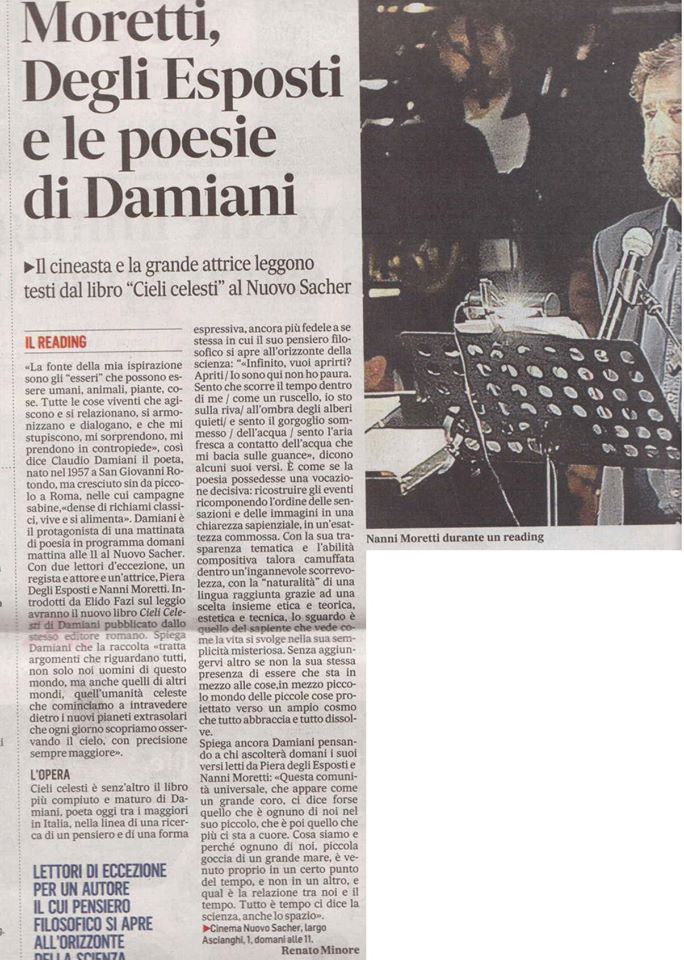
Renato Minore, Moretti, Degli
Esposti e le poesie di Damiani,
Il Messaggero, 11 febbraio 2017
Doris Zaccone, Cieli celesti,
Radio Libri, 2 febbraio 2017
Eraldo Affinati, “Cieli
celesti”, la fragilità dell’uomo
nei versi di Damiani,
RomaSette.it, 6 febbraio 2017
Pierangela Rossi, L’universo di
Damiani, un poema da leggere con
lentezza, L'Avvenire, 5 febbraio
2017
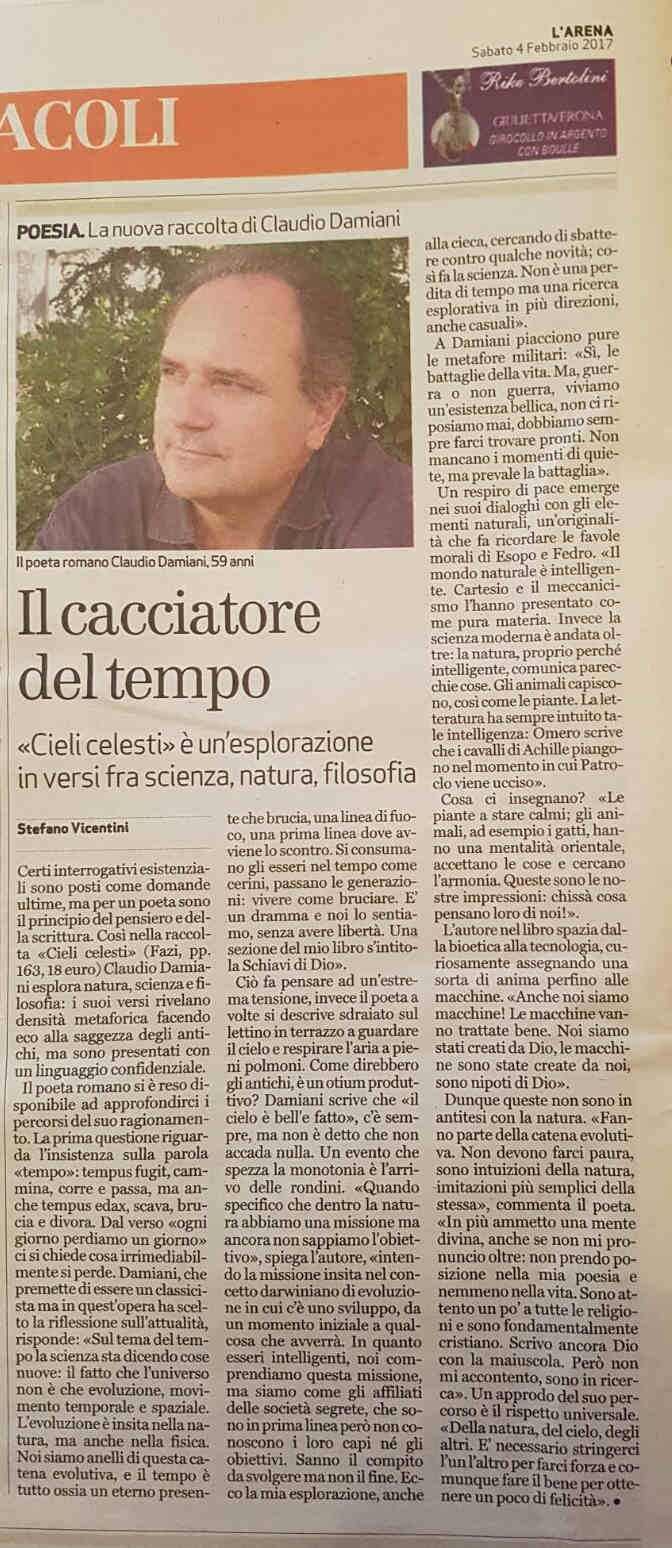
Stefano Vicentini, Il cacciatore
del tempo, L'Arena di Verona, 4
febbraio 2017
Chiara Fenoglio, Stupore e
contemplazione in Cieli celesti
di Claudio Damiani,
laletteraturaenoi, 3 febbraio
2017
Rosa Salvia, Cieli celesti,
lapoesiaelospirito, 23 gennaio
2017
Elena Buia Rutt, Tutti gli
esseri sono sacri, L'Osservatore
Romano, 22 gennaio 2017
Lucilla Noviello, Ritrovi. La
ritrovata pace di un’umanità
essenziale in Cieli Celesti,
affaritaliani.it, 16 gennaio
2017
Federica D'Amato, Poesia di
Claudio Damiani, Zest
Letteratura sostenibile, 16
gennaio 2017
Marina Pierani, Ma non è una
recensione, Inezie essenziali,
13 gennaio 2017
Roberto Marconi, Recensione a
Cieli celesti, ibs.it, 3 gennaio
2017
Andrea Galgano, I cieli celesti
di Claudio Damiani, Frontiera di
Pagine, 2 gennaio 2017
Marianna Comitangelo, La
semplicità difficile della
natura, in Passione poesia, a
cura di Sebastiano Aglieco,
Luigi Cannillo e Nino Iacovella,
Edizioni CFR, 2016, pp. 99-101
L. Lombardi, Tempo, Spazio,
Terra. Damiani contempla, in “Il
Tempo”, 19 dicembre 2016
Camillo Langone, Ci voleva un
poeta per parlare di bene e di
male, Il Foglio, 21 dicembre
2016
Fabrizio Centofanti, "Cieli
celesti, di Claudio Damiani", La
poesia e lo spirito, 3 dicembre
2016
Renato Minore, "Claudio Damiani,
le parole della poesia sui
luoghi del terremoto", Il
Messaggero.it, 25 novembre 2016
Roberto Galaverni, Le buone cose
di semplice gusto, Corriere
della Sera, 20 novembre 2016
Elisabetta Frazza, Claudio
Damiani, Poesie, Atlante
digitale del '900 letterario,
novembre 2016
Stefano Vitale, Cieli celesti di
Claudio Damiani, Il
Giornalaccio, novembre 2016
Silvio Perrella, Svegliarsi in
una notte del 2012..., Il
Mattino, 9 novembre 2016
Irene Bertelloni, Cieli celesti,
Intrattenimento.eu, 5 novembre
2016
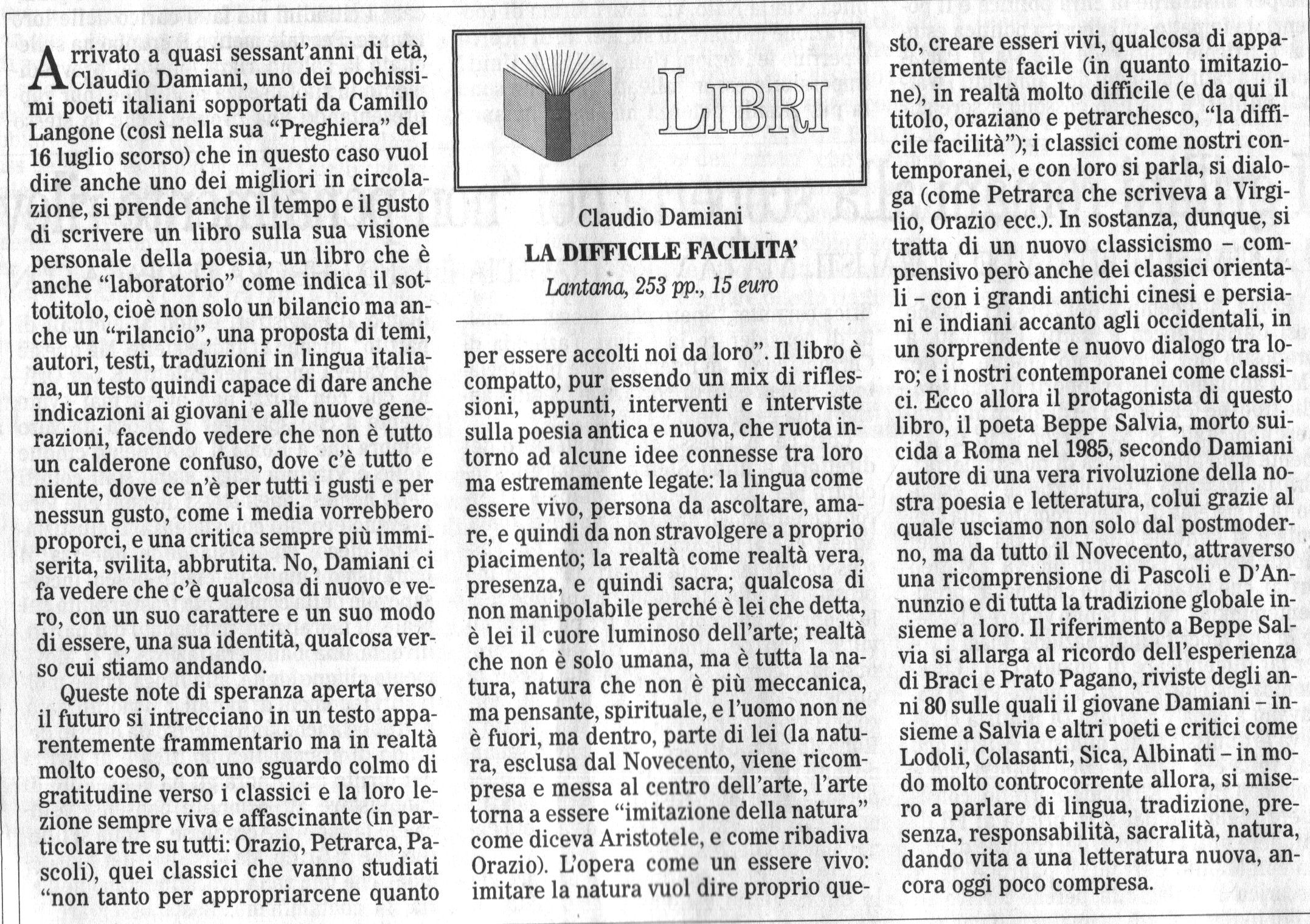
Andrea Monda, Claudio Damiani:
La difficile facilità, Il
Foglio, 6 agosto 2016
Eleonora Cardinale, "Poeti e
artisti nell’officina di
«Braci»", in "Poesia 70-80: le
nuove generazioni. Geografia e
storia, opere e percorsi,
letture e commento. Atti del
Convegno (Torino, 17-18 dicembre
2015)", a cura di B. Mannetti,
S. Stroppa, D. Dalmas, pp.
79-90, San Marco dei
Giustiniani, 2016
Andrea Caterini, Da Orazio a
Pascoli un manifesto fuori
dall'ideologia, Il Giornale, 24
luglio 2016
Camillo Langone, Damiani ci ha
ricordato la perenne validità
dei classici, Il Foglio, 16
luglio 2016
Alessandro Moscè, Claudio
Damiani tra silenzio e natura,
in Galleria del millennio.
Viaggi letterari 2004-2014,
Raffaelli Editore, 2016, pp.
141-142
Massimiliano Varnai, Claudio
Damiani, Fraturno, in Il
catalogo è questo, pp. 71-74,
Edizioni Unicopli, 2016
Damiano Sinfonico, E guardavo
e pensavo e sentivo.
Fraturno di Claudio Damiani,
in La poesia italiana degli
anni Ottanta. Esordi e conferme,
a cura di Sabrina Stroppa, pp.
125-143, Pensa MultiMedia
Editore, 2016
Salvatore Ritrovato, Claudio
Damiani, in Sotto il più
largo cielo del mondo. Trenta
poeti dauni, a cura di Canio
Mancuso e Raffaele Niro,
Quaderni dell''Orsa, n. 14,
febbraio 2016
Davide Tartaglia e Edoardo
Manuel Salvioni, Sulla scia
dei piovaschi. Poeti italiani
tra due millenni, pp.
223-226, Archinto, 2015
Carmen Leonor Ferro, "Claudio
Damiani, 'La resistencia de la
luz' – Una lectura (y una
traducción) en español",
Diacritica, dicembre 2015
Rita Pacilio, Nota di lettura su
“Il fico sulla fortezza”,
larosainpiu,
23 ottobre 2015
Marco Testi, La fusione con il
creato. Nelle liriche di Claudio
Damiani la meraviglia nei
confronti della natura, Parola
di Vita, 30 luglio 2015
Gabriella Palli Baroni, Ode al
Monte Soratte, Poesia n. 306,
luglio-agosto 2015
Camillo Langone, Preghiera, Il
Foglio quotidiano, 1 luglio 2015
Alberto Carpenedo, L'arte
poetica di Claudio Damiani, in
"Parole, immagini e situazioni
III", a cura di A. Mincigrucci e
I. Pozzoni, Limena Mentis,
Villasanta (MB), 2015
Ornella Spagnulo, L'ode al Monte
Soratte di Damiani, cronaca di
una vita intima, 1 luglio 2015
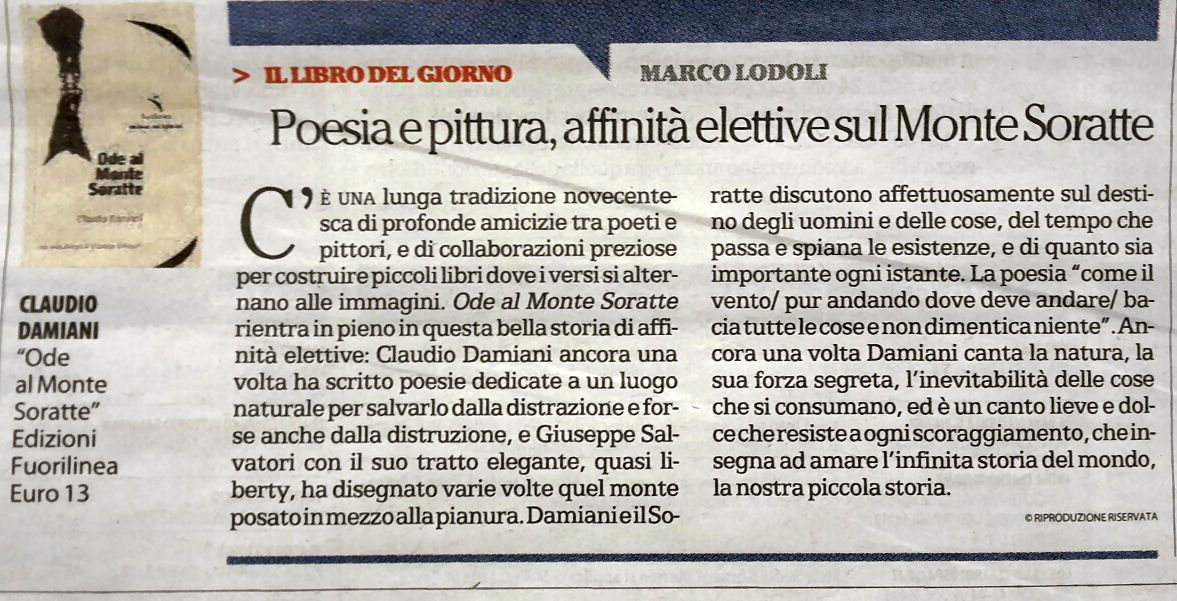
Marco Lodoli, Poesia e pittura,
affinità elettive sul Monte
Soratte, La Repubblica - Roma, 4
maggio 2015
Saverio Simonelli, Un poeta e il
Monte Soratte, La Compagnia del
Libro, Tv2000,
21 aprile 2015
Fabrizio Centofanti, Così
tanto (la poesia di
Claudio Damiani), La poesia
e lo spirito, 31 marzo 2015
Paolo Lagazzi, "Claudio Damiani,
L'aria fresca delle scoperte",
clanDestino, n. 4, 2013
Silvia Morotti, Claudio Damiani,
"Il fico sulla fortezza",
Soglie, n.1, aprile 2013,
pp.65-68
Giovanna Amato, Claudio Damiani,
cinque inediti e una nota di
lettura, Poetarum Silva,
6 ottobre 2013
Ornella Spagnulo, Il fico sulla
fortezza di Claudio Damiani,
cronacadiunavitaintima, 5
ottobre 2013
Mario Santagostini, Il fico
sulla fortezza, Motivazione
Premio Camaiore 2013, 14
settembre 2013
Leone D'Ambrosio, Poesia tra
presente e memoria, Avvenire
- Lazio sette, 8 settembre 2013
Alessandro Canzian, Poesie
di Claudio Damiani,
alessandrocanzian.wordpress.com,
18 agosto 2013
Alessandra Palombo, Il fico
sulla fortezza di Claudio
Damiani, Viadellebelledonne, 14
agosto 2013
Simone Giusti, Una poesia per
insegnare - 7, La ricerca,
Loescher,
1 luglio 201,
Giuseppe Pollicelli, Nei versi
di Damiani le preghiere
diventano poesia, Libero, 7
maggio 2013
Renato Minore, Perle di saggezza
tra le foglie, Il Messaggero, 23
marzo 2013
Renato Minore, Le poesie di
Damiani alla Casa delle
letterature, Il Messaggero, 11
marzo 2013
Dante Maffia, Su Il fico
sulla fortezza di Claudio
Damiani, Farapoesia, 24 febbraio
2013
Paolo Pegoraro, Damiani,
guardare è più che immaginare,
Romasette.it, 13 febbraio 2013
Andea Galgano, Claudio Damiani e
il fico sulla fortezza, Città
Del Monte, 17 gennaio 2013
Stefano Raimondi, Il fico sulla
fortezza, Book Detector, 23
gennaio 2013
Nunzio Festa, Il fico sulla
fortezza, Energheia, 10
gennaio 2013
Rossella Frollà, Il segno della
parola, Poeti italiani
contemporanei, Interlinea, 2012,
pp. 18-19, 225-246
Damiano Sinfonico, Il fico sulla
fortezza, Poesia, n.277,
Crocetti, dicembre 2012
Lucilla Noviello, La grande
poesia (mai sacrale) di Claudio
Damiani, Affari italiani, 21
novembre 2012
Anna De Simone, Case di poeti,
Mauro Pagliai Editore,
2012, pp.268-271
Rosa Salvia, L'arte poetica di
Claudio Damiani, La poesia e lo
spirito, 5 novembre 2012
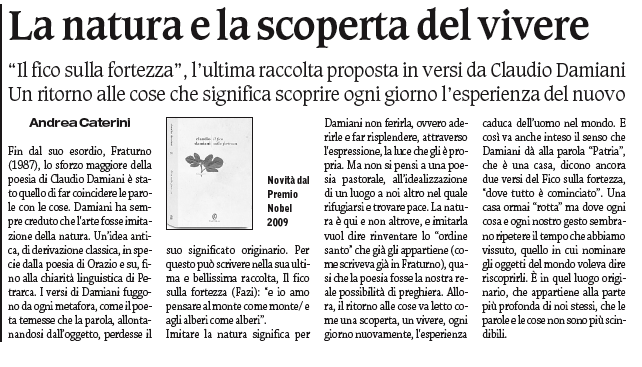
Andrea Caterini, La natura e la
scoperta del vivere, Corriere
Nazionale, 4 novembre 2012
Danela Attanasio, Versi segnati
da una gentile passività, Il
manifesto3 novembre 2012
Vivian Lamarque, I baci di
Damiani non sono mai troppi,
Corriere della Sera - La lettura,
28 ottobre 2012
Pierangela Rossi, Damiani e la
lingua semplice che ritrova la
poetica delle cose, Avvenire, 17
ottobre 2012
Aurelio Picca, Damiani, il poeta
che usa la penna per affettare
(tutte) le ideologie, Il
Giornale, 10 ottobre 2012
Camillo Langone, Preghiera, Il
Foglio, 2 ottobre 2012
Marco Lodoli, il ritmo profondo
della natura nelle poesie di
Damiani, La Repubblica, ed.
Roma, 24 settembre 2012
Stefano Lecchini, Natura
sacra, parola fraterna, La
Gazzetta di Parma, 21
settembre 2012
Alberto Pucciarelli, Un finale
vibrante con Claudio Damiani,
Controluce, 31 agosto 2012
Andrea Caterini, L'isola d'oro
di Claudio Damiani, Nuovi
argomenti, n. 58, aprile-giugno
2012, pp. 183-195 (poi in
Andrea Caterini, Patna, Letture
dalla nave del dubbio, Gaffi,
2013)
Dante Maffia, Claudio Damiani,
Poesie, Polimnia, n. 25,
maggio-giugno 2012
Gianfranco Lauretano, La
continuità del mondo abitato
nella poesia di Damiani, in Il
mito nel novecento letterario, a
cura di A. Melillo, Limina
Mentis Editore, 2012, pp. 52-57
Adriano Napoli, Vola alta,
parola, Poeti italiani
1967-2010, Marcos y Marcos,
2011, pp. 302-309
Vanni Pierini, Oh mia Patria,
Versi e canti dell'Italia unita,
vol. III, pp. 589-590, p.761,
Ediesse, 2011
Sandra Di Vito, Claudio Damiani:
la gentilezza, promessa di bene
e destino, Il filo rosso, n. 51.
giugno-dicembre 2011
Giovanna Fozzer, Claudio
Damiani, Poesie, Città di vita,
luglio-agosto 2011
Giulia Calligaro, Un sonetto
(forse) ci salverà, Io Donna -
Corriere della Sera, 29 ottobre
2011
Antonietta Gnerre, Claudio
Damiani, Poesie, Gradiva -
International Journal of Italian
Poetry- N. 39/40, ottobre 2011
Raffaella Bettiol,
Classici d'oggi: Claudio
Damiani, La "Dante" a Padova,
n.3, ottobre 2011
Giovanna Fozzer, Claudio
Damiani, orto pieno di cose,
Infinite tracce, 11 settembre
2011
Maria Viveros, Claudio
Damiani «Perché la poesia non è
uno svago», Trentino, 10
settembre 2011
Piergiorgio Viti,
“Poesie”: i luoghi interiori di
Claudio Damiani, 2duerighe, 2
agosto 2011
Valentino Fossati, La
"basilare fiducia" di Claudio
Damiani, ClanDestino, n.2,
luglio 2011
Lucilla Noviello, La
poesia "sdraiata" di Claudio
Damiani, Affaritaliani.it, 21
giugno 2011
Angelo Parisi,
Attraversamenti poetici. Claudio
Damiani, “Poesie”,Il
Colophon, 18 giugno 2011
Alba Donati, La Poesia,
Il Fatto Quotidiano, 3 giugno
2011
A. Afribo, E. Zinato, Modernità
italiana. Cultura, lingua e
letteratura dagli anni settanta
a oggi, pp. 226-230, Carocci,
2011
Salvatore Ritrovato, Claudio
Damiani e la "miniera" della
poesia, in Piccole patrie, Il
Gargano e altri Sud letterari,
Stilo Editrice, giugno 2001,
pp.145-153
Nazario Tartaglione, Lo
spirito e il soffio vitale della
natura nell'universo poetico di
Damiani, l'Attacco, 27 aprile
2011
Alberto Pucciarelli, Poesie di
Claudio Damiani, Controluce, 14
Aprile 2011
Giuseppe Panella,
"Guardiamo quello che ci sta
vicino...", Retroguardia 2.0, 3
aprile 2011
Giuseppe Grattacaso, Claudio
Damiani, poeta classico,
Giudizio Universale, 28 marzo
2011
Alida Airaghi,
Su Poesie di Claudio Damiani,
farapoesia, 8 febbraio 2011
Antonietta Gnerre, A
Pratola il poeta Damiani si
racconta, Corriere, 5 febbraio
2011
Stefania Marotti,
Damiani, la poesia nell'armonia
del mondo, Il Mattino, 5
febbraio 2011
Alberto Toni, L'umanità
di Claudio Damiani, L'Avanti, 3
febbraio 2011
Franco Loi, Vibra la
vita nelle poesie di Damiani, Il
Sole 24 ore, 23 gennaio 2011
Stefano Raimondi,
Claudio Damiani, Poesie, Pulp,
genn.-febb. 2011
Antonio De Lisa, Claudio
Damiani, Poesie, In Poesia, 4
gennaio
Silvio Ramat, Damiani,
la misura di sapere dire le cose
che contano, Il Giornale, 13
dicembre 2010
Laura Cioni,"Che bello
che non siamo eterni": la via
dello stupore di Claudio
Damiani, ilsussidiario.net, 29
ottobre 2010,
Angelo Lippo,
Classicismi e linguaggio
asciutto: le poesie del pugliese
Damiani affondano nel passato,
Puglia, 19 ottobre 2010
Nunzio Festa, Poesie
(1984-2010) di Claudio Damiani,
stefano donno, 16 ottobre 2010
Paolo Pegoraro, Un poeta
sulle orme di Teilhard De
Chardin?, Zenit, 12 ottobre 2010
Angelo Lippo, Una poesia
che non divaga e non si distrae
in inutili acrobazie
stilistiche, Literary, 9 ottobre
2010 (v. anche Punto D'Incontro-
Letteratura, n.1/2, mar.-giu.
2011)
Enzo Golino, I versi
amici di Damiani insegnano la
bellezza di non essere eterni,
Il Venerdì di Repubblica, 8
ottobre 2010
Rosa Salvia, Nota a
Sognando Li Po, Poiein, 8
ottobre 2010
Filippo La Porta, Il
paradiso ritrovato di Damiani,
Il Riformista,
2 ottobre 2010
Sandra Petrignani,Che
bello che non siamo eterni.
Poesie di Claudio
Damiani,L'Unità, 27 settembre
2010
Davide Rondoni, Roma
capitale poetica, il Sole 24
ore, 26 settembre 2010
Renato Minore, nei versi
di Damiani tutti i bambini del
mondo, Il Messaggero, 26
settembre 2010
Lauretta Colonnelli,
Universo di poesie, Corriere
della Sera, 26 settembre 2010
Nicola Bultrini, Damiani
e il miracolo quotidiano di
vivere, Il Tempo, 26 settembre
2010
Alessandro Moscè, Lieti
versi francescani che
attraversano l'anima", Corriere
Adriatico, 25 settembre 2010
Camillo Langone,
Preghiera, Il Foglio, 25
settembre 2010
Bianca Garavelli,
Damiani canta il fluire
dell'esistenza senza retorica,
Avvenire, 25 settembre 2010
Davide Brullo, Qualche
perla ai porci mondani, La Voce
di Romagna, 21 settembre 2010
Marco Lodoli, Il ritmo
profondo dell'esistenza -
L'importanza dei versi di
Damiani, Il Riformista, 21
settembre 2010
Stefano Clerici,
Quei versi colorati e felici che
tengono saldo il cuore, La
Repubblica, 20 settembre 2010
Ida Bozzi, L'antico
Damiani, poeta contro le
avanguardie, Corriere della
sera, 19 settembre 2010
Andrea Monda, Claudio
Damiani, Poesie, Il Foglio, 18
settembre 2010
Giovanni Piccioni, Se il
tempo ferisce...con gentilezza,
Liberal, 11 settembre 2010
Marco Lodoli, prefazione
a Claudio Damiani, Poesie, Fazi,
2010
Carmelo Princiotta, Sognando
Li Po,
Annuario di poesia 2009, Gaffi
Salvatore Ritrovato, Claudio
Damiani, Sognando Li Po,
Incroci, numero 19,
gennaio-giugno 2009
Alessandra Palombo,
Claudio Damiani in Sognando Li
Po, La poesia e lo spirito
Valentino Zeichen,
Motivazione Premio Lerici Pea
2009
Viola Papetti, Claudio
Damiani, Un creaturale sulle
orme di Li Po, Alias, Il
Manifesto, 7 marzo 2009
Giorgio Nisini, Attorno
al fuoco,
in Poesia 2007-2008 Annuario, a
cura di P. Febbraro e G.
Manacorda, pp. 300-302, Gaffi
Elena Buia, Eroismo di
una debolezza che sfida il
fluire del tempo, L'Osservatore
Romano, 25 febbraio 2009
Giorgia
Dell'Orco, Sognando Li Po,
AbsolutePoetry, 6 gennaio 2009
Sauro Albisani, Sognando
Li Po, testo letto in occasione
della presentazione di Sognando
Li Po, Biblioteca Marucelliana,
Firenze, 23 gennaio 2009
Paolo Pegoraro, Sogno e
realtà di un poeta in esilio,
Letture, 1 gennaio 2009
Alberto Bertoni,
Sognando Li Po, in Almanacco
dello
Specchio 2008,
Mondadori, 2008
Lorenzo Carlucci,
Sognando Li Po, Absolute Poetry,
9 novembre 2008
Camillo Langone, Chi è
Claudio Damiani, Il Giornale -
Tempi, 20 ottobre 2008
Andrea Di Consoli, Li
Po, se le montagne sono pensieri
e le pietre versi, L'Unità, 10
settembre 2008
Nunzio festa, Sognando
Li Po, Books and other sorrows,
28 giugno 2008
Antonio Spadaro, Poesia
cinese: la parola come
germoglio, La Civiltà Cattolica,
III 2008
Stefano Lecchini,
Saggezza cinese in Sognando Li
Po, poesie di Claudio Damiani,
La gazzetta di Parma, 5 luglio
2008
Paolo Lagazzi, Damiani
alle fonti dell'antica saggezza
cinese, Avvenire, 28 giugno 2008
Giancarlo Mancini,
Poesia, se l'ascolto è sottile,
Corriere della Sera, 22 giugno
2008
Giovanni Mariotti,
Damiani, la vera poesia è senza
metafore, Corriere della Sera,
18 giugno 2008
Alberto
Cappi, La biblioteca di Writer,
La voce di Mantova, 13 settembre
2007
Ennio
Cavalli, Un sentiero sui Monti
Lucretili, Leggere:tutti, giugno
2007
Paolo Lagazzi,
motivazione assegnazione Premio
Internazionale Mario Luzi, ed.
2006/2007
Giorgia Dell'Orco,
"Attorno al fuoco" di Claudio
Damiani, poesia nell'arte del
vivere, Poesia nelle scuole,
antologia a cura dell'Unione
Lettori Italiani, Edizioni
dell'Oleandro, 2007
Marco Lodoli, La
primavera con i versi di
Damiani, La Repubblica, 18 marzo
2007
Rossano Astremo, Quando
il poeta scopre il presente,
Nuovo Quotidiano di Puglia, 14
marzo 2007
Alessandro Moscè, New
Italian Poetry, An Anthology ,
Gradiva Publications – Stony
Brook, New York, 2007
Sergio D'Amaro, Attorno
al fuoco, Incroci, n. 14,
Genn./Dic. 2006
Gianfranco Lauretano,
Clandestino, n. 3, 2006
Adriano Napoli, Luoghi
separati. Profili di poeti
contemporanei, Neftasia, 2006
Salvatore Ritrovato (a
cura di), Dentro il paesaggio.
Poeti e natura, Archinto, 2006
Alberto Toni, L'Avanti,
5 ottobre 2006
Alberto Bertoni, Trent'anni di
Novecento. Libri italiani di
poesia e dintorni (1971-2000),
p. 279, Book Editore, 2006
Gabriella Palli Baroni,
L’isola di Claudio Damiani,
Corriere elbano, 31 agosto 2006
Stefano Lecchini, I
fantasmi della libertà.
Scrittori fra invenzione e
destino, Moretti & Vitali, 2006
Giuseppe Roncioni,
Attorno al fuoco, Pulp, 31
agosto 2006
Adriano Napoli, Attorno
al fuoco, vico acitillo 124
Luca Nannipieri, Poesie
intorno al fuoco, La voce di
Romagna, 25 giugno 2006
Roberto Gigliucci,
Teoria del classicismo semplice,
Stilos, 20 giugno 2006
Alberto Cappi, La Voce
di Mantova, 8 giugno 2006
Carlo Bordini, Raccolta
di versi con filosofia, L'Unità,
5 giugno 2006
Andrea Monda, La poesia
viva di Damiani, Avvenire, 4
giugno 2006
Filippo La Porta, La
poesia negli angoli del
quotidiano, Left Avvenimenti,
2/8 giugno 2006
Marco
Maugeri, La manutenzione degli
affetti, Conquiste del Lavoro,
27 maggio 2006
Enzo Siciliano, Falò
familiare, L'Espresso, 11 maggio
2006
Anna De Simone - Catia
Gusmini, in Scrittori e
scritture, Poesia e teatro, Le
Monnier, 2006, pp.232-5
Davide Rondoni, Claudio
Damiani secondo Davide Rondoni,
a cura di Andrea Monda,
RaiLibro, settimanale di letture
e scritture
Luca Nannipieri, in A.A.
V.V., Best off, Il meglio delle
riviste letterarie italiane,
Minimum fax 2005
Flavia Giacomozzi, in
Campo di battaglia, Poeti a Roma
negli anni Ottanta,
Castelvecchi, 2005, pp. 103-13
Gian Mario Villalta, in
Il respiro e lo sguardo, Un
racconto della poesia italiana
contemporanea, Scuola Holden
BUR, 2005, pp. 86-92
Marco Merlin, Poeti nel limbo,
Interlinea, 2005
Raffaella Scarpa, in
Parola plurale, sessantaquattro
poeti italiani fra due secoli,
Luca Sossella editore, 2005
Maurizio Cucchi, in
Dizionario, La Stampa Web
Simone Giusti, Claudio
Damiani, verso il basso e
all'indietro, in Sotto la
superficie, letture di poeti
italiani contemporanei
(1970-2004), Bocca Editori, 2004
Alessandro Moscè (a cura
di), Lirici e visionari, poeti
italiani contemporanei, Il
lavoro editoriale, 2003
Adriano Napoli, Per una
lettura di Fraturno, Poiein, poi
anche in La clessidra, 2/2004
Giuseppe Genna, Gli
eroici furori di Claudio
Damiani, Clarence - Società
delle Menti (www.clarence.com)
Roberto Mosena, Claudio
Damiani, Eroi, Sincronie, n.12,
2002
Roberto Galaverni, Come
una voce bianca. La poesia di
Damiani, in Dopo la poesia.
Saggi sui contemporanei, Fazi,
2002
Mary Barbara Tolusso,
Eroi, L'Ulisse, n.4, (http://www.lietocolle.it/Ulisse4/Ulisse.htm)
Antonella Anedda,
Passaggio sul mare - poeti al
Grand Hotel Cervia, a cura di R.
Galaverni, Archinto, 2002
Alessio Brandolini, un
destino comune, sull'ultimo
libro di poesia di Claudio
Damiani, Vibrisse , n.54,
23.12.2001
Alessandro Moscè, Gli
antieroi che diventano eroi,
inedito
Mauro Ferrari, Sulla
poesia di Claudio Damiani,
www.edizionijoker.com
Adriano Napoli, Eroi,
Poiein (www.loso.it/poiein),
dicembre 2001
Michele Trecca, Eroi, La
Gazzetta del Mezzogiorno, 11
novembre 2001
Marco Merlin, Di alcuni
caratteri della poesia romana
(prima parte), Atelier, n.23,
Settembre 2001
Giorgio Manacorda,
Poesia 2000 - Annuario critico,
pp.32-33, Castelvecchi, 2001
Marco Lodoli, Sulla
ciclicità della vita e
sull'attrazione degli opposti.
Da Schopenhauer a Damiani, la
storia di due sorelle, Diario
della settimana, 2001
Francesco Vinci, Eroi ,
Poesia 2000 - Annuario critico,
pp.136-137, Castelvecchi, 2001
Sara Celiberti, Poesie
per il padre, Panorama per i
giovani, Collegio Universitario
"Lamaro - Pozzani"
Tiziano Mariani, Eroi,
Panorama per i giovani,
residenza Universitaria "Lamaro
- Pozzani", N. 1, Gennaio-Aprile
2001
Alberto Garlini, Eroi,
Arca noae, forum a cura di
Renato Calligaro,www.arcanoae.it
Bianca Garavelli, La
terra paterna, motivazione per
Eroi di Claudio Damiani
vincitore del Premio "Sibilla
Aleramo" 2001
Massimo Raffaeli,
Finitudine, nota a Claudio
Damiani, Albio e altri eroi,
Comune di Ancona, Centro Studi
Franco Scataglini, 2001
Roberto Galaverni (a
cura di), Bertolucci, Damiani,
Loi, Piersanti, I luoghi dei
poeti,Palomar 2001
Mauro Ferrari, Eroi, La
clessidra , n. 1, aprile 2001
Pierangela Rossi, Damiani canta
l'eroe che vive nel cuore dei
bambini, Avvenire, 25 aprile
2001
Gianfranco Lauretano,
Eroi, Clandestino, 1/2001
Daniele Piccini, Eroi, Famiglia
Cristiana, 6 aprile 2001
(scorri pagina)
Daniele Piccini, L'albero
familiare di Claudio Damiani,
Letture, 1 aprile 2001, n.
47-48. Ora anche col titolo
di Tremante felicità di dire in
Daniele Piccini, Con rigore e
passione. Viaggio fra le letture
del nostro tempo, I Quaderni del
Battello Ebbro – L’Albatro
Edizioni, 2001, pp.268-269
(scorri pagina)
Alberto Cappi, La biblioteca di
Writer, La voce di Mantova -
Domenica 29 marzo 2001
(scorri pagina)
Giuseppe Genna, Eroi,
Clarence.com - Società delle
menti, Venerdì 12 gennaio 2001
Stefano Lecchini, Nel nido della
terra, La Gazzetta di Parma, 12
gennaio 2001
(scorri pagina)
Marco Maugeri, Il Poeta che
sconfisse la morte, Stilos-La
Sicilia, 6 gennaio 2001
(scorri pagina)
Marco Lodoli, Eroi d'umiltà,
lezioni minime di fine anno, La
Repubblica , 31 dicembre 2000
(scorri pagina)
Elio Grasso, Eroi, Vibrisse, 24
dicembre 2000 (scorri
pagina)
Alba Donati, Claudio Damiani, Il
Giorno-La Nazione-Il Resto del
Carlino, 18 dicembre 2000
(scorri pagina)
Giovanni Mariotti, Damiani,
parole quotidiane, in musica,
Corriere della sera, 2000
(scorri pagina)
Enzo Di Mauro, Damiani. Un
cantico di brace nel cuore del
moderno, Alias - Il Manifesto,16
dicembre 2000
(scorri pagina)
Andrea Di Consoli, Eroi. La
morte spiegata ai figli,
L'Avanti , 4 dicembre 2000
(scorri pagina)
Mauro Ferrari, L'occhio e il
cuore: riflessioni sui
contemporanei, La clessidra,
1/2000, pp.9-11
Roberto Galaverni, in
Contemporary Italian Poets -
Modern Poetry in Translation No.
15, King's College London, 1999
Giancarlo Pontiggia, La
miniera, "Poesia", n.131,
settembre 1999
Daniele Piccini, Tra Fraturno e
il mondo: il decennale
canzoniere di Claudio Damiani,
La clessidra, n. 1, Aprile 1999
Plinio Perilli, in
Melodie della terra, Crocetti,
Milano, 1998
Gian Mario Villalta, La
miniera. La compostezza delle
cose, "Tratti", n.49, autunno
1998
Pasquale Di Palmo, in
"Il Golfo", n. 9-10,
settembre-ottobre 1998
Roberto Galaverni,
Claudio Damiani. La bianca
miniera della poesia, "Nuovi
Argomenti", n.1/2, Quinta serie,
gennaio - giugno 1998
Roberto Grandinetti, Ma
Pascoli illumina il lato buio
della storia, "Il Quotidiano", 1
maggio 1998
Francesco Vinci, La
miniera, "Poesia '97", a cura di
Giorgio Manacorda, Castelvecchi,
1998
Roberto Carvelli,
Damiani, poesia dentro il tempo,
"L'Adige", 19 gennaio 1998
Daniele Piccini, I libri
di un anno. Le uscite di poesia
italiana del 1997, "Poesia", n.
113, gennaio 1998
Giovanna Sicari, La
miniera, "Galleria", n. 3,
settembre-dicembre 1997
Stefano Lecchini, E la
poesia tornò a raccontare,
"Gazzetta di Parma", 23 dicembre
1997
Bianca Garavelli, Da
Bertolucci a Damiani,
sperimentali e crepuscolari,
"Avvenire", 13 dicembre 1997
Davide Rondoni, in
"ClanDestino", n.4, 1997
Domenico Adriano, La miniera,
"Avvenimenti", 26 novembre 1997
Franco Loi, Chiara,
dolce, fresca è la lingua, " Il
Sole-24 Ore", 2 novembre 1997
Giovanni Mariotti, Ci
sono anche gli autori
ornitorinchi, "Corriere della
Sera", 26 ottobre 1997
Stefano Crespi, Se
appare il colore
dell'indicibile, "Il Sole-24
Ore", 19 ottobre 1997
Daniele Piccini, La
miniera rompe con l'intimo
Fraturno, "Letture", ottobre
1997
Umberto Fiori, La
miniera, "Atelier", n.7,
settembre 1997
Giovanni Mariotti, E in
fondo alla miniera c'è Orazio,
"Corriere della Sera", 22
settembre 1997
(scorri pagina)
Ermanno Paccagnini, ll fervore
degli editori e la risposta
degli autori, da Viviani a
Conte, Mussapi e Damiani - Non
disperiamo, la salvezza è dietro
l'angolo. Parola degli amici
poeti, "Famiglia Cristiana", 3
settembre 1997
(scorri pagina)
Elio Pecora, Quando l'amore cede
al distacco e non alla perdita,
"La Voce Repubblicana", 29
agosto 1997
Enzo Siciliano, Con Orazio nella
miniera, "L'Espresso", 14 agosto
1997
(scorri pagina)
Ermanno Krumm, La miniera, "Il
Foglio", 1 agosto 1997
(scorri pagina)
Gabriella Sica, La miniera, "La
Stampa - Tuttolibri", 24 luglio
1997
Massimo Onofri, E i
versi riscoprono la tradizione.
In dialetto, "L'Unità", 30
giugno 1997
Manlio Cancogni, La
miniera, "Diario della
settimana", 18-24 giugno 1997
Mario Bernardi Guardi,
Giovannini e Damiani:
l'avventura di far poesia, "Il
Tempo", 7 giugno 1997
Simone Caltabellota, in
Ci sono fiori che fioriscono al
buio. Antologia della poesia
italiana dagli anni Settanta a
oggi, Frassinelli, 1997
Roberto Galaverni, in
Nuovi poeti italiani
contemporanei, Guaraldi, 1996
Paolo Febbraro, La mia
casa, "Poesia", n.97,
luglio/agosto 1996
Stefano Lecchini,
L'incanto condiviso, "La
Gazzetta di Parma", 4 aprile
1996
Paolo Febbraro, La mia
casa, "Galleria", n.3,
settembre-dicembre 1995
Roberto Deidier, Le
promesse mantenute di quattro
nuovi poeti, "La voce
repubblicana", 9-10 ottobre 1995
Maria Pia Ammirati, La
mia casa, "Tempo Presente",
n.175/176, luglio-agosto 1995
Franco Loi, Verde voce
del paesaggio, "Il Sole-24 Ore",
2 luglio 1995
Domenico Adriano, La mia
casa, "Avvenimenti", 24 maggio
1995
Enzo Siciliano, Il
fanciullino che ama Orazio,
"L'Espresso", n.13, 31 marzo
1995
Antonio Debenedetti, in
"Corriere della Sera", 30 marzo,
1995
Antonio Debenedetti,
Dallo sdegno alla nostalgia,
"Corriere della Sera", 23
febbraio 1995
Emanuele Trevi, Notizie
da Fraturno, prefazione a La mia
casa, Pegaso, 1994
Stefano Dal Bianco,
Poesia contemporanea. Secondo
quaderno italiano, "Poesia",
n.63, giugno 1993
Franco Buffoni,
prefazione a La via a Fraturno,
"Poesia contemporanea. Secondo
quaderno italiano", Guerini e
Associati, 1992
Franco Buffoni, in
"Poesia", n.38, 1991
Arnaldo Colasanti,
prefazione a "Gemme apicali" di
Paolo Del Colle, Rotundo, 1988
Giovanni Mariotti, Opere
prime - Ars poetica, L'Europeo
, n.12, 18 marzo 1988
Emilia Costantini,
Elegia con tunica e calzari,
Corriere della Sera, 1 luglio
1986
Valeria Fortini, Proserpina ama in alessandrini, Corriere della Sera, 28 giugno 1986
CLAUDIO DAMIANI A CULTBOOK (RAI 3)
INTERVISTA A CLAUDIO DAMIANI
di Veronica Tinnirello,
marzo 2014
(parte
prima,
parte
seconda)